

Parenting & Learning
10 Benefits of Colouring for Kids: How It Supports Learning & Development
Sep
Is colouring just a way to keep kids busy, or does it actually help them grow? It does a lot more than most parents think. This guide explains 10 benefits of colouring for kids, what each one looks like at different ages and how to make colouring time more valuable. It’s for parents and teachers of children aged 2 to 12.
Quick answer: Colouring helps kids build fine motor skills and pencil grip, improves focus and patience, teaches colours and shapes, supports handwriting readiness, encourages creativity and self-expression, and gives children a calm, screen-free way to relax.
Key Takeaways
- Colouring strengthens the small hand muscles children need for writing.
- It builds concentration, patience and the ability to finish a task.
- It’s a healthy, screen-free activity for home, travel and school.
- Choose pages that match your child’s age so colouring stays fun, not frustrating.
10 Benefits of Colouring for Kids
1. Builds Fine Motor Skills
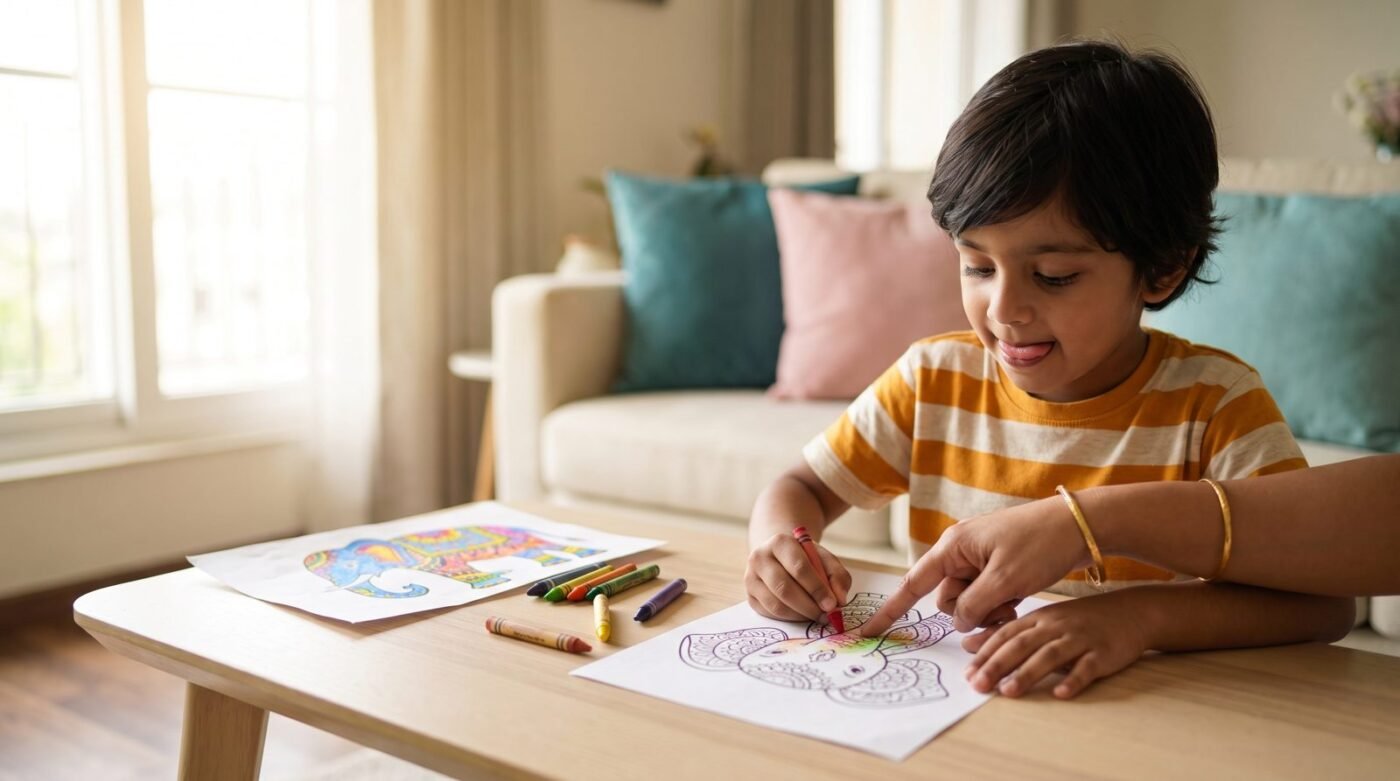
Holding a crayon and moving it within lines works the small muscles in the fingers, hand and wrist. These same muscles are used for buttoning clothes, using a spoon and, most importantly, writing.
2. Prepares Kids for Handwriting
Colouring teaches children to control pressure and direction. A child who has coloured regularly usually finds it easier to form letters when school writing begins, because they already have a steady tripod grip.
3. Improves Focus and Attention
Finishing a colouring page requires sitting in one place and concentrating on one task. Over time, children can colour for longer periods, which helps in the classroom too.
4. Teaches Colours, Shapes and Patterns
Colouring naturally introduces colour names, shapes and simple patterns. Educational pages go further with letters, numbers and objects, making learning feel like play.
5. Encourages Creativity
There’s no single right way to colour. A purple elephant or a rainbow tiger is a creative choice. Letting kids pick their own colours builds confidence in their ideas.
6. Helps Kids Express Emotions
Young children don’t always have words for how they feel. Colour choices and drawings give them another way to express themselves, and colouring together often opens up easy conversations.
7. Calms and Relaxes
The repetitive, focused motion of colouring has a soothing effect. Many parents use colouring as a wind-down activity after school or before bedtime.
8. Reduces Screen Time
Colouring is one of the easiest screen-free alternatives. The World Health Organization recommends no sedentary screen time for children under 2 and no more than one hour a day for children aged 2 to 4, so having simple offline activities ready really helps.
9. Builds Patience and a Sense of Achievement
Completing a page from start to finish teaches kids to see a task through. Hanging finished pages on the fridge or wall gives them real pride in their work.
10. Improves Hand-Eye Coordination
Staying inside the lines means the eyes and hands must work together. This coordination supports sports, crafts, building blocks and many everyday skills.
How Colouring Benefits Change by Age
| Age | Main benefits | Best page type |
|---|---|---|
| 2 to 3 years | Grip, colour recognition, hand strength | Very large shapes, thick outlines |
| 4 to 5 years | Pre-writing control, shapes, focus | Simple animals, alphabet pages |
| 6 to 8 years | Patience, creativity, following instructions | Scenes, colour-by-number |
| 9 to 12 years | Concentration, relaxation, planning colour schemes | Mandalas, detailed patterns |
How Long Should Kids Colour?
There’s no fixed rule. Let the child lead. As a rough guide, toddlers stay engaged for about 5 to 10 minutes, preschoolers for 15 to 20 minutes and older kids for 30 minutes or more. Stop while it’s still fun rather than pushing them to finish.
Tips to Get More from Colouring Time
- Use the right tools: Jumbo crayons for toddlers, colour pencils for older kids.
- Don’t insist on staying inside the lines: Control improves naturally with practice.
- Talk while colouring: Ask about the picture and colour choices.
- Mix learning in: Name colours, count objects and trace letters.
- Display their work: A small “art wall” boosts confidence.
- Colour together: Kids love it when parents join in.
Find the Right Colouring Book for Your Child
At Gifts Craft Studio, we create colouring books for every age, from bold, simple toddler pages to educational activities and detailed mandalas for older kids. Download instantly and print at home, or order a printed book. New to printables? Read our guide on how to print colouring pages at home.
Frequently Asked Questions
At what age should kids start colouring?
Most children can start scribbling with jumbo crayons around 15 to 18 months. Proper colouring within shapes usually begins around age 2 to 3.
Does colouring help with handwriting?
Yes. Colouring builds the finger strength, grip and pressure control children need to form letters when they start writing.
Is colouring good for a child’s brain?
Colouring supports focus, hand-eye coordination, colour and shape recognition, and creativity. It also gives kids a calm, screen-free activity.
Should kids colour inside the lines?
Not at first. Young children should be free to scribble and experiment. Staying inside the lines develops naturally as their motor control improves.
